A work in progress towards living a sustainable life, healthy life, making a living and creating a life, leaving smaller footprints on the earth. It is my hope that the smaller footsteps will gain momentum and leave large imprints of conscious living to enable our children to enjoy the beauty and abundance that surrounds us.
Tuesday, April 30, 2019
The conversation with nature
Monday, April 22, 2019
Black Gold
Sunday, April 21, 2019
Painting with plants
Friday, April 19, 2019
Compost bin part 1
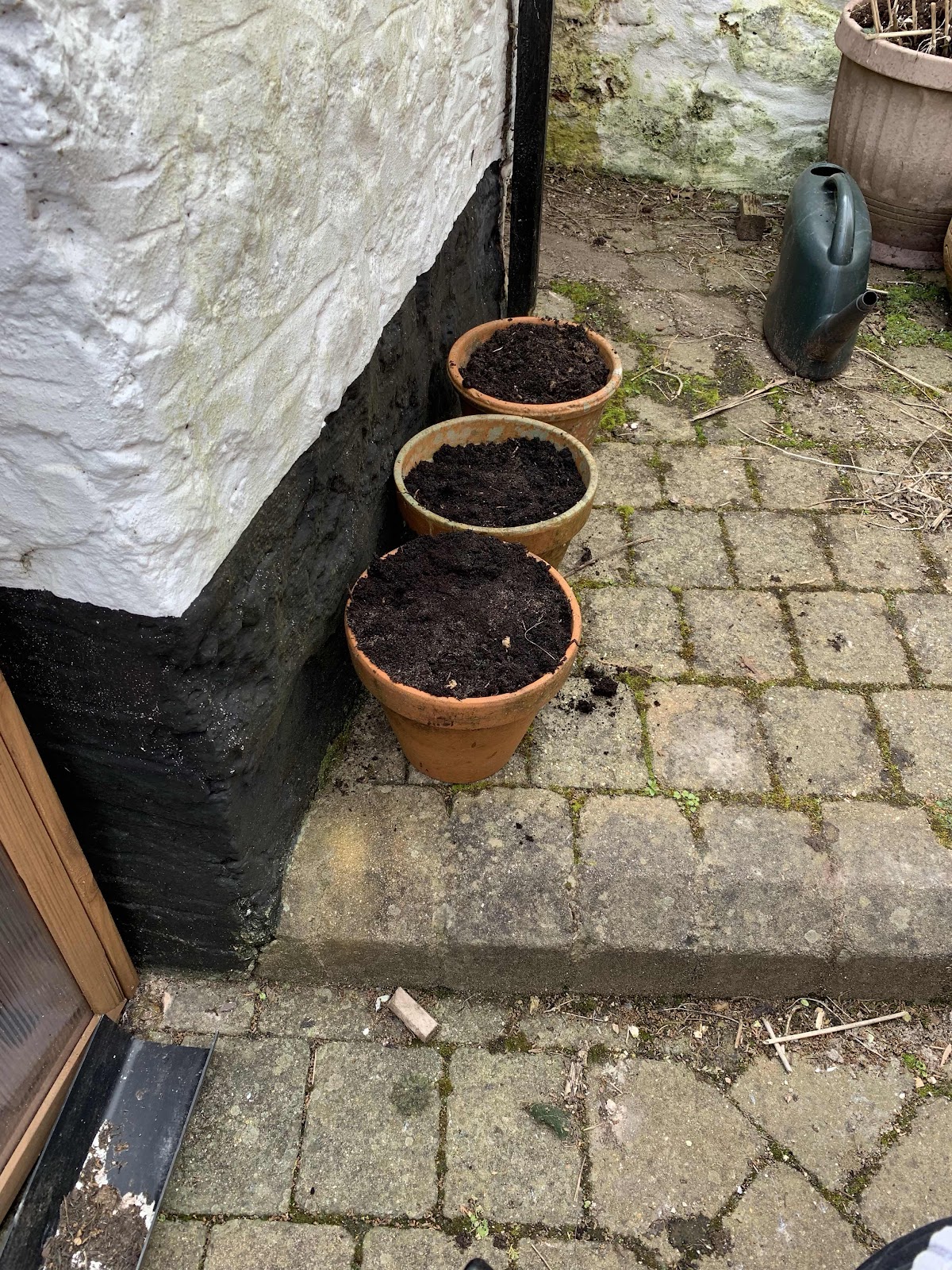
Today’s gardening task with help is going to be crucial to continue to reduce the waste from the garden as well as home and decreasing the waste produced and sent away. The compost heap. It’s small but bijou. My grow beds will get a top up on a regular basis and I intend to put waste to better use. Secret to good compost seems to be in the planning: brown and green waste. Seems I have a variety of that so walk with me.Bacteria are the future !
Wednesday, April 10, 2019
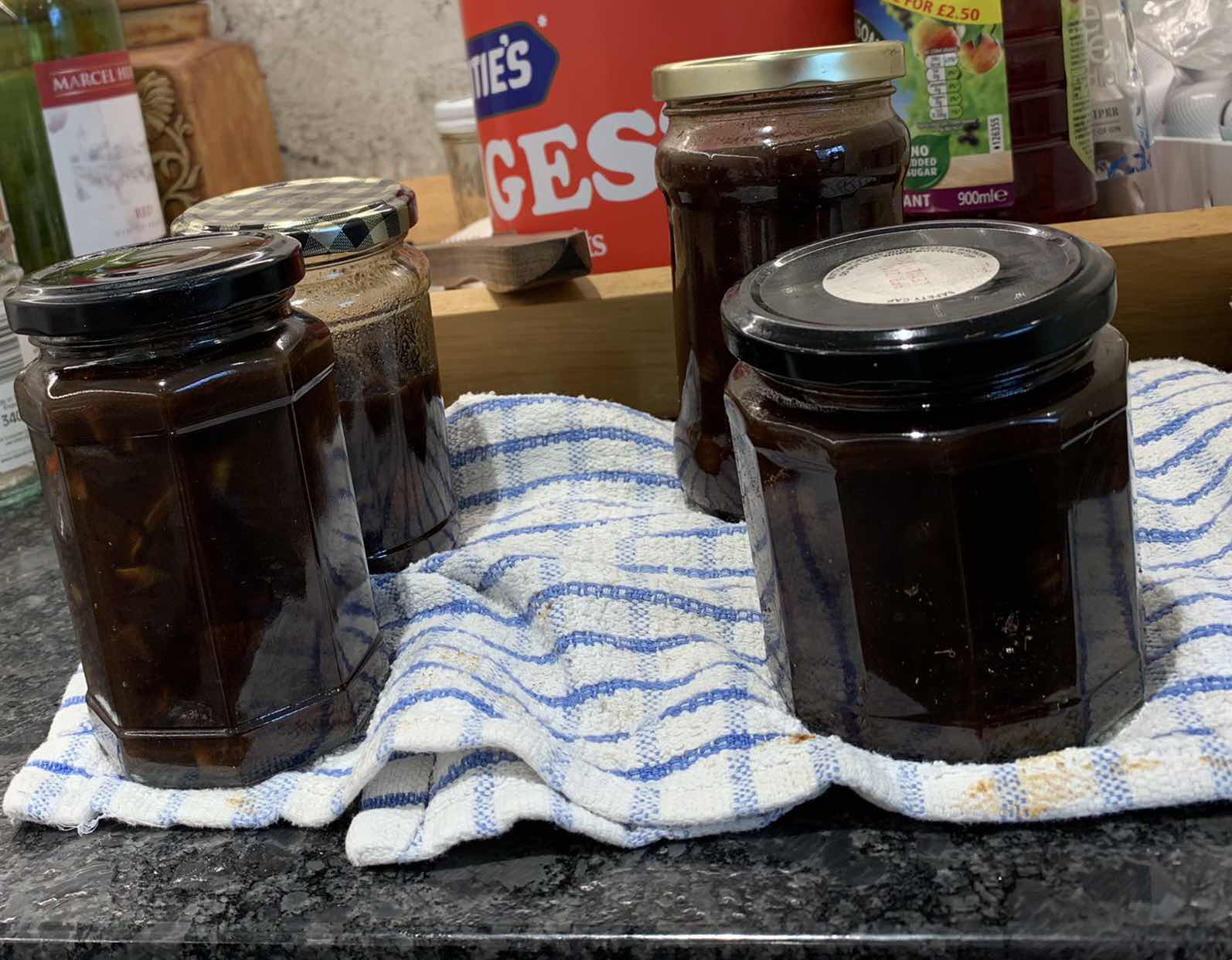
Rhubarb and Date chutney
Monday, April 08, 2019
With a little help ....
Sunday, April 07, 2019
Through the misty glaze
Lost
After visiting my Aunt and taking part in my Uncles funeral , my daughter and I got back to our hotel. We stayed in an old convent that offered basic accommodation but after all we just wanted a bed.
In the morning, the day of our return, I seemed to have difficulty eating, walking and even remembering my card code to pay. We decided however to take the journey back slowly, one stage at a time, taking our time. I felt myself slipping away and entering a sort of mythical kingdom, my thoughts interrupted by my daughter asking me to count backwards from 100. On the train I munched on a sandwich but it appeared it took me a whole hour to deal with this sandwich. When she had to leave the train at her station she made me promise to look for my husband who would be there. She tucked me in and pinned a note to my coat. I however was in my mythical calm kingdom, lost to myself. My husband did indeed find me at the station and took me straight to hospital where I did not have to wait but got whizzed into emergency. My parallel magical kingdom kept me in a safe bubble. A nurse explained to me to imagine a crash on the motorway. I was observing she said, from my mythical kingdom, there was a lot of debris, it would take time to clear however to be assured that the road was still there.
Then I slept for 36 hours and when I awoke, calmly I realised that I was quite safe in my mythical kingdom but that I had had a stroke and would gently have to find my way back. But the road was still there. The note pinned to my coat had read : please look after my mom.
Saturday, April 06, 2019
New home
Friday, April 05, 2019
Friday, October 09, 2015
Project 333
Friday, September 18, 2015
a Handmade Wardrobe
Wednesday, September 09, 2015
The difference between needing and wanting
Tuesday, September 08, 2015
A little more ....
Friday, September 04, 2015
BACK AGAIN
Spending a year in hospital in a very small space certainly motivates and focusses the mind on what we need to stay alive. Just breathing is essential.
Certainly will pick up the blog again and introduce you to even more downsizing. If you are still there give me a sign of life?
Monday, April 15, 2013
Monday, March 25, 2013
HOW TO KEEP WARM
CLOTHING
If we put on clothes that warm us and keep us toasty we are less likely to feel a bonechilling cold permeate us. A 100% wool sweater, gloves and socks are going to keep us cosy but if you still feel the cold the warmth of the fibre such as alpaca can raise the temperature. Wrapping ytourslef in a dressing gown or duvet heat the space wound you. The warmest fiber is qiviut but it is hard to get sufficient to date to increase the insulation factor. Check your clothing: a 50% wool/cotton combination is unlikely to keep you warm in winter. Most of our body temperature escapes via our heads so a hat is recommended.
HOT DRINKS
For just a few seconds. A cup of hot chocolate creates a fleeting feeling of warmth in your hands and stomach but not a change in your internal temperature—which is a good thing: Maintaining a stable body temperature is essential to having healthy organ function and a steady heartbeat. We associate it with a cosy inside feeling which is a placebo effect.
WOOD BURNERS AND OPEN FIRES
We do have a woodburner and without central heating it gives us the opportunity to warm one room in which we can all huddle together. It creates a warm feeling watching the logs burn and we can sit on the sofa, read a nice book and have a conversation.
CURTAINSClosing the curtains or shutters enables the heat to stay in as a lot of heat escapes via windows and doors
DOORS
Seal your doors with doorstoppers ( a big long padded roll) so the heat stays in and draughtproofs the room.
ROOMS
Close off any unused rooms which will enable the warm air to stay where you are instead of circulating throughout the house.
FLOORS and ATTICS
Cover the floors in carpets or rugs which will insulate them against warm air escaping through the gaps and insulate the attic to keep warm air escaping via the roof. You can see how well your house is insulated by seeing if there is snow ( when it snows) on your roof or whether the heat from the house is melting the sneow on your roof.
COOK
Make cookies, or a meal ( without too much steam)/ Not only will you be moving about but the kitchen will warm up as the oven works and dry the air in the kitchen.
The snow can cause power to be cut so keep candles at hand.
Hopefully these measures will make you feel a bit warmer. A brisk walk or exercise will raise the temperature a little in your boidy and if all else fails, hibernating under the duvet can keep you cosy.
I hope these measures will warm you up a little in the shortterm.
Saturday, March 16, 2013
Banana cake with crunchie
Ingredients :
- 200g Self raising flour
- 1/2 teaspoon of bicarbonate of soda
- pinch of salt
- 2 eggs beaten
- 75g butter
- 175g caster sugar
- 3 large amshed bananas
- 2 crunchie bars
Grease and line a deep 1/2 kg loaf tin
Place flour,bicarbonate of soda,salt, eggs,butter and sugar in a bowl and mix together.
Add mashed bananas and put the mixture in the loaf tin. Then break the crunchie bars up, put on the top of the mixture and swirl inside the mixture.
Bake at 180 degree Celcius for about 45 mins to 60 mins until an inserted skewer comes out clean.
Cool for 5 mins and then transfer to a cooling rack.
Hide away in a tin until you can no longer resist.
Friday, March 08, 2013
5 benefits to Living in a community
When mentioning a life in a community it can be as intense as living as a member of the Amish Community in which the rules are set by each community such as no electricity, no cars, mobile phones etc to living in a particular place or joining an interest group online of like minded people.
In a time of economic downturn the equation between money and time shifts and my priorities in times of economic downturn shift too to spending more time investing in myself through reading, learning new skills and connecting with other people.
The 5 benefits of living in a community:
A sense of belonging
Many people feel isolated from the world by the fact they have no friends or relatives in their community. This can lead to loneliness and eventually depression. A community spirit can instil a sense of belonging in these individuals, they are no longer alone, and they lead healthier, happier lives.
Security
Living in a community protects the individual from the harshness of having to do everything.(The “every man for himself” mentality. ) It can help a person who falls on hard times if they are in a community to feel supported, rather than living a corporate lifestyle where a person is only as good as their latest contribution. Community living also means that most of the people know each other. A small town environment like that often means less crime and also less need for surveillance. Surveillance is a consequence of living amongst strangers.
The sharing of resources
Sharing resources can greatly reduce the cost of living. Many of the luxuries that people enjoy are not used 24/7, or even if they are used frequently, they can often be shared. The quality of items that can be afforded goes up while the cost goes down. You can live cheaper and better, and the only cost is being more social.
Resources can be shared through the LETS system and FREECYCLE groups.
The transition towns initiative are creating communities that prepare themselves for sustainability after peak oil.
Cooperation and Competition
It is natural for individuals to cooperate with each other. We are a tribal species. In fact, cooperation on an individual level is very beneficial, because generally each person is interested in and skilled at different tasks than their peers. As a result close knit groups of individuals whose skills and personalities complement each other can be particularly healthy, happy, and successful.
Employment and fulfillment
One of the greatest benefits of living in a community setting is that it gives us the freedom to care for our lives, our wealth, and often both at the same time. There is no reason for the community to resent individuals for participating in a way that does not directly benefit the bottom line. We can work together as business partners who share equally in the burden of maintaining the community economically. The needs of a community are numerous, and the avenues of occupations that could benefit a community are likewise numerous. Using local skills and expertise can benefit the individual member economically but also forges networks of professional relationships who have a sense of place and local solutions.There are many diverse ways in which an individual can contribute. By working within a community each individuals skills and abilities can be applied in a unique way, and no person need feel like a cog.
And community living is not just something for the countryside, there are areas in large cities that create hubs of community, where a local cafe becomes a meeting place, a place to relax and cultivate the relationships that bind us together as human beings.
Thursday, February 28, 2013
Planning to live in a small home
At the time they lived in the country in a 4 bedroomed family property with a bit of land near woodland. They had built their dreamhome when I was about 12 and before that had lived in a town. My mother liked her garden and my father liked the idea of playing his music when he wanted without disturbing neighbours. I grew up near the riverbank, planted a small garden and safely went for nature walks in the wood.
At some point something triggered a change of direction. The house was 2.5 miles from the nearest shopping facility and my father's health deteriorated. My mother did not drive and they posed themselves the question how they would manage later on in their lives.
They visited many retirement homes and eventually decided to settle in a university town with plenty going on. They settled for a 2 room apartment ( bedroom and living space) and decided to make the most of the space available by purchasing new furniture. Then they transferred all the things that were precious to them ( very little) and settled in.
But what about the family home?
- First they invited friends to choose what they wanted and needed a little bit like a freecycle open house.
- Secondly they invited acquaintances and other villagers to come and choose what they wanted and needed.
- Then they got a company to clear out the rest of stuff and set about selling the house.
A few months ago, we bought a small cottage where we live in 600 sq feet and the children live above in a similar space. Effectively its a bedroom, kitchen, bathroom and bedroom downstairs, and we are following some of the same principles with the difference that we are far from retirement.
It is certainly not tidy and a work in progress but we only brought with us what we thought we needed. And even then I have established I have far too many serving dishes and crockery.
Instead of having many rooms each room offers an area set up for different activities, whether it be reading, cooking, recycling etc.
The children did the same and left behind a lot of stuff they had outgrown, games, videos etc We each have our own space and common areas such as the kitchen, shower room and living room. Yes it can get crowded but it is also cosy sitting by the fire, enjoying a hot drink and reading or conversing together.
The running costs are lower and we have managed without much central heating so far by lighting the woodburner and the range in the kitchen.
What about the garden?
There is a small front garden full of wildlife and a paved garden at the back of the house which hopefully will in time have enough produce growing in pots.
Life is simple. the owl lives in the big tree, the birds awaken us at dawn and there is a sense of personal peace and contentment as I go about our new home. So far I have not missed many items left behind.
Friday, February 22, 2013
How to reduce paper clutter
The last few weeks I have been looking at the amount of resources used made of paper and how these could best be dealt with. Despite best efforts to stop junk mail and catalogues it became apparent that it still streams in the house.
- Mail gets opened near the paper recycling box and generally there is very little actual communication that needs a response.
- Inbox- I have set up rules for incoming emails so the important ones get directed to their named inbox and junk box. It means being less overwhelmed by the amount of messages in the IN box. Turned off the 'ping' when an email comes in so I am not tempted to an immediate response.
- Unsubscribe from emails you are not interested in.
- Do not create accounts when purchasing items online and do not give out your email address when asked in shops or create an alias email for that purpose which redirects immediately to junk email.
GOING PAPERLESS ON BILLS
- Bank statements and utility bills can now be received digitally as opposed to a paper copy.
- Try to find out which companies offer paperless billing and choose that option. It will reduce the mail being opened and also saves the company money.
- Set up a reminder monthly to check the digital bills and keep a copy on your computer. Mine are divided into business and private bills and accessible anytime.
LETTERS,RECEIPTS,OFFICIAL PAPERWORK
- Letters from Government agencies, receipts and official letters are quite often kept in a folder and in any case should be accessible for 7 years.
- To save them on a computer you will need a scanner. I save information in 3 places : computer, backup locally and a folder facility in the cloud.
- I am a fan of Evernote as my back up because since having a stroke I have difficulty finding things and the notes saved on Evernote allow them to be searched by any word, as well as being available on mobile phones so in essence you carry the ability to carry vital information with you wherever you are.
- Simple Life Together has a podcast episode six,dedicated to going paperless and Brooks Duncan has a whole website dedicated to going paperless.
- Vanessa Hayes has a big range of videos to help organize anything in your home but in particular an action file.
BOOKS AND MAGAZINES
- Books are available digitally as a direct download to an e reader or often as e-books which reduces the amount of book shelving space you need in your home.
- I like that idea a lot but often there are books I will refer to often and those I still like to have in a hard copy on the shelf.
- As far as magazines go, I am gradually changing any subscriptions to digital ones. Zinio have a great range of magazines and if you have an Ipad you carry with you a great amount of reading material.
- Cookery books and Craft Magazines are being revisited and the articles and recipes that are of interest are scanned in, using Evernote I can search for the recipe anytime. Many cookery books tell a story and are good companions for cooking seasonally.