Wednesday, February 10, 2010

Nurturing the soil

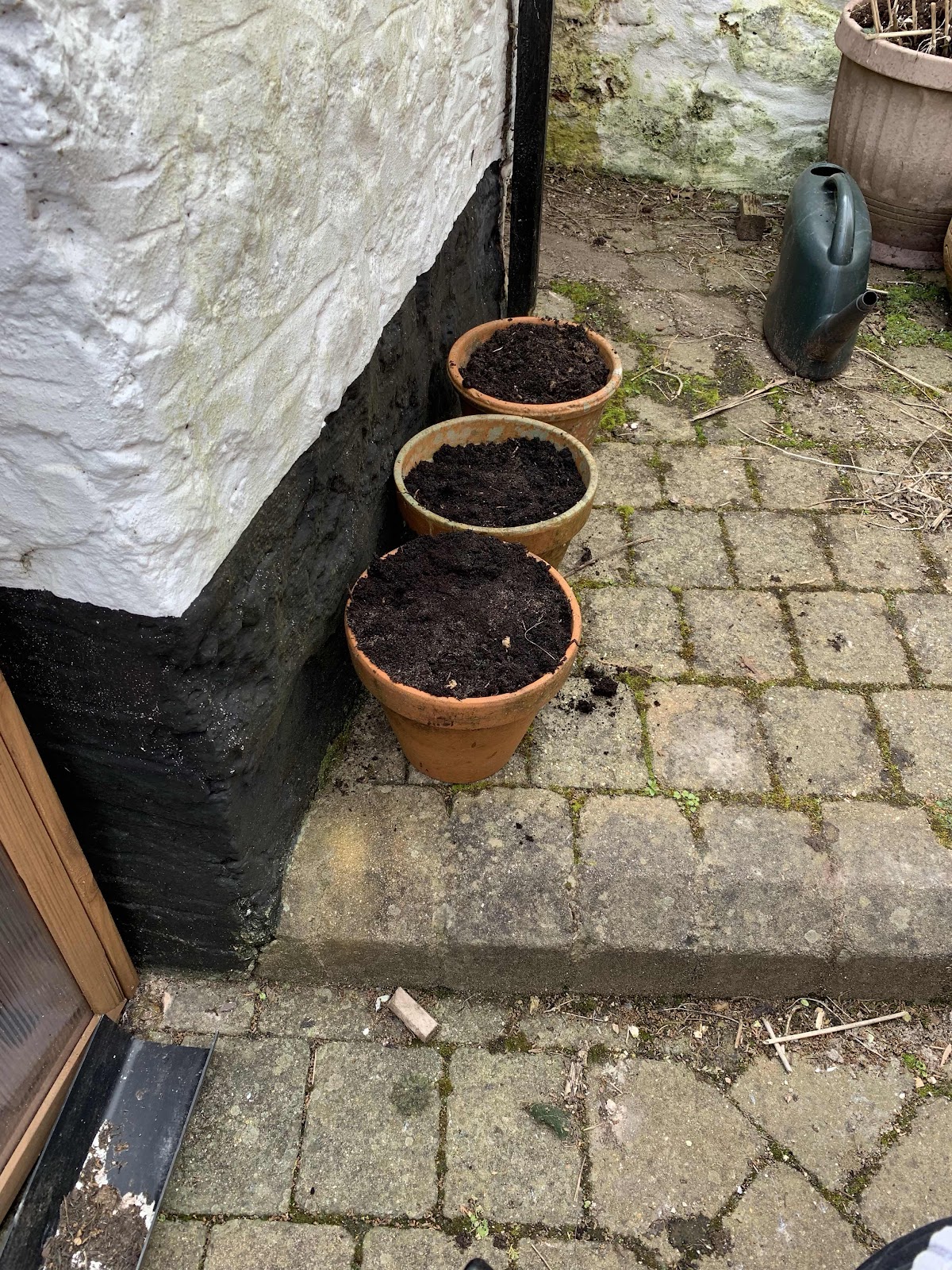
This year's project involves replenishing the garden and after careful observation a plan is forming on how to let nature recreate the space we have into a food producing ecosystem. Having spent time in the garden, listening, watching the grass grow, the rain fall, the puddles form, the leaves fall and the slugs crawl I am ready for the next step..
The answer can be found in nature, in forests where every layer, every plant and every microorganism work in synergy for the benefit of another.

Instead of wanting to dominate nature in the way of traditional gardening, I want to explore the permaculture way of engaging in beneficial relationships between plants, soil, insects and wildlife and start observing, listening and interacting with what the garden has to say.

I want a relationship with the ecosystem in my garden but does it want a relationship with me?

I want to ask questions about plants and bugs; who are you, what do you do for the garden and what do you need from the garden? How can I take my place in the garden instead of dominating the system?

Tuesday, February 09, 2010

The power of a question

Every child goes through a phase where they ask their parents and everyone else the most important question; WHY?

How would you react if your child asked the question : Why is it getting bad for every living thing on the earth? Why Global warming? How did it get this bad? What exactly are we going to do about it?

And not every parent takes the question on board and turns it around by asking : and what are you prepared to give up?

How would it feel to downshift by living on half of what you own?

The story of how one family's daughter challenged her parents on social injustice and as a result followed through by selling their house, downshifting and giving the proceeds to charity to make a difference. How would you react if your child asked the question : So, how did it get that bad with the planet? This Global warming, what exactly are we going to do about it. What happens if we challenge teenagers and ask them : What are you prepared to give up?

Not an easy question to respond to.

The Power of Half


Watch CBS News Videos Online

Monday, February 08, 2010

The rewards of a simple life

To find the universal elements enough; to find the air and the water exhilarating; to be refreshed by a morning walk or an evening saunter….to be thrilled by the stars at night; to be elated over a bird’s nest or a wildflower in spring- these are the rewards of the simple life.

80% of our time is spent on our physical needs :


  • Food
  • Warmth
  • Shelter
  • Work
  • Education
  • Health

20% is spent on our Spiritual,  social and psychological needs :


  • community
  • love
  • friendship
  • beauty
  • art
  • music
When we concentrate all our energies in providing for our physical needs, we lose:


  • a sense of belonging
  • active and meaningful supportive relationships
  • the support of friends
  • an appreciation of the beauty that surrounds us
  • expressions of creative beauty found in music and the arts.

Non material experiences are needed to feed our imagination and our creativity. We need time to contemplate, to make things with our hands, to express our selves.

Searching for a simpler lifestyle  may be a call from the soul to not forget our social, psychological and spiritual needs.

To create a balance we could :


  • write a letter to a friend and make arrangements to meet.
  • spend time with our partners and talk a walk in nature
  • make time to reflect, meditate and relax
  • plan a garden and sit in a nature sanctuary
  • visit an art gallery
  • make bread
  • find ways to express our creativity.
Above all, we could simply be who we are and connect with others.

Personal exploration: leave a comment and share how you express your creativity


    Saturday, February 06, 2010

    Marmalade time

    The Seville oranges are back and our first preserve to fill the pantry this year will be Orange Marmalade.

    A step by step visual recipe for you to enjoy.

    Thursday, February 04, 2010

    10 fruits to grow in the garden


    Fruit trees, bushes, crowns and canes are an investment to start with but after 3 to 4 years, cared for, they will provide you with a return each year.

    Three trees were gifted to me this year, apricot, greengage and victoria plum.

    Here is our selection to provide fruit throughout the year:

    1. Rhubarb- purchase them as crowns. These are the very first fruits of the season, make excellent pies, leaves used in mordanting fibre, crowns can be used as a dye.

    2. Strawberries - lush, easy to grow in pots or as groundcover ( works well with rhubarb in a pie)

    3.Apricot - tree, needs to be planted where the sun shines most day as it is a warm weather tree.

    4. Blackcurrants, white currants and red currants : bushes providing berries in July/ August, excellent for jams, jellies and cordials.
    5. Cherries - A morello cherry tree can flourish on a north facing wall and provide a good crop provided it is netted when the cherries ripen, otherwise the birds will strip the tree.
    6. Gooseberries - a prickly bush, makes good jelly as it is high in pectin.
    7. Plums,greengages, damson - eat fresh, can or freeze, jams and jellies.
    8. Berries - Raspberries, Tayberries, Loganberries, Blackberries, Mulberrries, Blueberries cultivated and wild.
    9. Apples and pears - If you have space you can create a succession of harvests lasting from October to January.
    10. Quinces and Medlars-

    Tuesday, February 02, 2010

    10 ways to enjoy a film again and again

    Movies are a form of entertainment that has always appealed to me, in similar ways to books. Yet, when you read a book, you use your own imagination to create a picture based on the descriptive language chosen by the author. Films on the other hand, combine the vision of the author with that of the film director to bring you an experience.

    How can you enjoy that experience for less?

    1. Going to the cinema will provide you with the large screen experience and is a great way to get together with friends yet an expensive option.
    2. Rent a film via lovefilm or netflix and invite friends over for a social evening, popcorn and potluck drinks and you have a similar social experience on a smaller budget.
    3. Use the library to borrow films to watch and return when you have enjoyed the movie.
    4. Purchasing movies creates ownership and then you can put it on your shelves for later viewing.
    5. Swap a movie with a friend. One of my sons swaps the loan of a costume for the loan of a film so both friends get a different night out.
    6. Sell your DVD's via Magpie if you need cash quickly use the money as you wish.
    7. Bring and buy your DVD's to a charity stall and purchase another film to watch, a great way to enjoy a classic film.
    8. List your DVD with the film circle, pass on your DVD to someone else and choose another one to watch. Search by category or actor, film director etc.
    9. Pay to download movies onto your phone or Ipod via Itunes, watch it for a week and then it simply disappears.
    10- Catch a movie on BBC Iplayer, Channel 4 on demand, ITVplayer, as long as you hold a current UK TV licence.

    Saturday, January 30, 2010

    Teaching children financial responsibility

    This article is in response to Jenny's email about how to introduce personal finance principles to children


    From birth children are dependent on their parents. Gradually from fulfilling all their needs we teach them to take care of themselves, to eat sensibly, to exercise, we provide them with an education yet seldom do we teach them how to be financially responsible.

    When I was a child I was often told to clean my room and yet it took me a while to realise that although given the instruction, I was not told how to clean it and what tools to use. Subsequently I would be proud of my efforts in a 'clean room' to be told that actually it did not conform to my parents idea of ' clean room'. Thus I learnt that people's expectations are different and levels of comfort are different. So how can we expect our children to be financially responsible in the future if we do not give them the tools and provide opportunities to learn the necessary skills within a safe environment.

    Money is a tool, it is a major component in our society, it is complicated to comprehend only because it has been made invisible.

    As a family we gradually prepare our children from childhood to look at what money does, how you get some, how you spend it, save it and work with it and how you get by without any.

    Most children in today's society have a lesson on coins at school as part of the mathematics curriculum but do not have any practice in using real money to purchase items with. Most families would shop at supermarkets, take what they want from shelves, put a card in the reader and voila, shopping done. This reinforces children's knowledge that yes everything you want is provided for by parents and food and other items can be obtained by putting a card in the reader. Easy as pie.If that is their only exposure to finance and money then it would follow that when they leave home at 18 their expectation will be that a) parents will provide everything you want and b) that a card in the reader does pay for everything. Add to that credit cards, student loans and the relationship with money is easily lost.

    There are pitfalls as parents in letting go of some of the control by giving your child money to spend but if handled in a progressive way, children do learn from their mistakes and learn to find solutions that work for them. It can be an empowering  learning path for everyone involved.

    Our basic progression is as follows :( not really age related but progress when stage satisfactory negotiated)
    age 5 to 10 - give your child opportunities to buy items with real money and opportunities to earn pocket money, save for special items and donate small amounts to charity. In the shop we encourage our young shoppers by helping them make a connection between the coins in their hand and the items they can purchase. Its mostly sweets and treats at this age but it is an important step.
    age 7 to 10 - we set up a savings account in the child's name with a book in which each transaction is recorded. This provides ownership of money as a tool and the opportunity to save, withdraw and spend money as they wish. Money is still used for items they mainly want at this age and can give an insight into your child's priorities.
    age 11- the savings book is changed to a card account and the child has some autonomy over the transactions. A small amount is paid into this account to finance personal spending.  At the same time, we withdraw money from our account by card as a budget when planning purchases such as clothes and give the child opportunities to choose and buy within the money they have to hand. If they find a cheaper item they get to keep the rest. This encourages them to shop for best value and rewards careful consuming.( best value does not always mean lowest price) Our children soon figured that if you did a bit of research your basics could be provided for and then you had extra for all those treats you wanted.
    age 12 - We make a list of all clothing requirements to ensure that the child starts off with all its needs catered for. After this shopping experience we discuss an allowance which is to provide funds for clothes, shoes, entertainment, gifts, hair cuts i.e all the items shopped with previously in cash as part of their budget. We ask the children based on their experience what they need and if we believe it is not sufficient we give them more, if too much is asked for we ask them to justify their budget. This helps them negotiate. In our experience they underestimate what they need and quote a ridiculous low figure. We agree the boundaries of the allowance( i.e. we pay for educational expenses), interest rates for loans and opportunities to ' earn' money and agree that we will pay a certain amount into their account monthly and they agree that they will manage their money as they see fit and come and speak when they experience difficulties. Loan rates are offered so they know they can borrow money too. We as 'parent bank', are quite flexible and agree not to criticise their buying decisions, merely be available to help them find solutions should they have difficulty. This crucial period provides them with complete control over their finances without in fact lacking in anything.

    As a parent this is the most interesting time. It is hard to see your child spending money on what they perceive as their necessities and the firm boundary needs to remain in place.( often I deliberately stay silent on my opinions but listen as they tell me about their exciting purchase)  So if for instance there is no money to go on that cinema trip with your friend because you have spent it all on comics, well then maybe that acts as a lesson to leave some money aside for going to the cinema. It is hard on parents. Its hard on children but a useful step towards independence.

    As the years go by, the children establish their areas of budget and some for instance spend more on image and others more on gadgets it depends entirely on what their expectations and interests are as well as the effects of advertising and peer pressure. When the money does not stretch they have to find ways to for instance, delay,borrow, buy secondhand, do without, barter or find opportunities to earn more just like adults. It provides useful discussions as to why the amounts suddenly do not meet their needs. They create their  own ideas, purchase their own stuff and are asked to deal with their own stuff and its consequences. ( i.e. new game station = more expensive games)

    At age 16, we do not clean nor tidy rooms, we do not wash clothes and watch the children as they gradually gain confidence ( and do not buy red tshirts that they wash with white ones). We discuss the allowance each year and check that it meets their needs ( not always their wants) and so on. We discuss safety of internet banking and personal safety. Be prepared to deal with anxious children who lose their card and enable them to make the call and answer all security questions.Stand by if help is needed. By paying money into their account you should have at least the account number available as odds are they have no idea. Once a hurdle has been overcome they learn how to deal with mistakes and difficulties. Teenagers rarely have any money in their account to worry about....

    At age 17 and 18 we listen to their plans for the future and offer ideas on costs involved. We introduce the idea of real living expenses, transport, taxation. etc.  ( we levy a tax on their earnings of 10% which is to be paid into the family account and discuss taxi fees). Expect as a parent to be challenged on this issue and show evidence of electricity use, phone bills, transport costs etc.

    As an adult we will ask our young adult to contribute a proportionate cost of earnings to living at home at a fair percentage of overall costs.

    This would be an ideal progression and there are likely to be unique challenges with your unique child. We try to keep calm, encourage them to come and see us if they have a difficulty and offer possible solutions : the actions that they need to take to solve the problem need to be taken by them and is their decision. So delaying telling the bank that you have lost your card for 3 months means you cannot access any money. 

    As they reach adulthood and earn money, the allowance is reduced as they gradually earn their own money. Should you be faced with a child that refuses to work, an allowance can easily be reduced until it is stopped. Nothing focusses the mind of a young adult without money.

    One of our children has reached adulthood and found it a worthwhile experience( we think), maybe a unique way to be taught about money but is and has been for many years financially independent. ( leave a comment if you want, well done, you graduated!)

    So far we have an 11 year old who has his first bank card and it has proven to be a real temptation to use it, a 14 year old who finds that the way he spends in fact does not actually make him happy and he is without certain items and a 16 year old who compromises on clothing to upgrade his gadgets. Each has their own way of managing their money, some better than others but they work together to find solutions. So far only 1 child has asked to borrow from the parent bank and did not take out the loan as apparently the interest rate was too high and saving for 3 months would cost less. ( at that point you smile inwardly!)

    Simply because we as parents chose a frugal life following the principles of voluntary simplicity does not in fact guarantee that our children will follow the same path. It does however provide opportunities for discussion, mutual respect and personal development all around.

    The above plan encapsulates the three basics of life,food ( as well as treats), warmth ( clothing) and shelter( living costs).

    It is a journey with pitfalls, mistakes, joys and scary rides for parents but we know that they have the opportunity to make mistakes with the ' parent bank' and that when it comes to negotiating their money as a tool, they should in principle be money wise.

    As parents you gain boundaries on your children's budget, you learn from them and will be able to see some who spend, some who save ,some who live above their means, and some who are minimalist, in fact a cross representation of every adult.