Wednesday, February 24, 2010

Exciting - move with me


Exciting yes, scary too as I try to transfer the contents of this blog to its new home. I am assured it is likely to go seamlessly but then again, it might not.

Changing the blog might bring you a list of latest posts in your inbox as a subscriber and I apologise if it does not go to plan.

Lets be bold and surprised at the same time.

Thanks for your patience.

I posted on barefootabundance. com today about how to free yourself from junkmail in 5 clicks.

Monday, February 22, 2010

Moving to Barefootabundance


Its still a work in progress as I am getting to grips with new technology but it will be great to see you there.

You can find me at barefootabundance dot com

This is a period of transition so let me know what you think and how it could be improved for you.

Thanks

Anne

Thursday, February 18, 2010

Blog Housekeeping

Dear Reader

Even blogs can get cluttered and I am currently doing a little housecleaning here and there, packing up a few boxes before I move to a new website home, where getting the information contained will be easier to access and action.

As with everything this may go smoothly or be very bumpy, so bear with me and I will write you an update of when I can show you around.

I am working hard at learning codes and templates and it is likely to take me a week or so before I can master new skills.

Monday, February 15, 2010

A time for resting


Does your body feel sluggish? Are you lacking in energy?

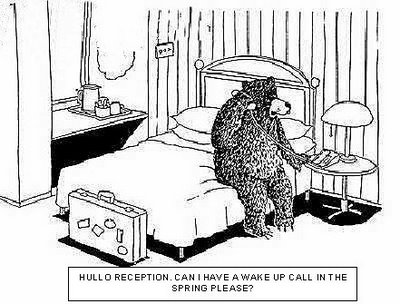
Winter is a perfect time to build up supplies of internal strength and vitality and maybe when I do not take note of that I feel the sluggishness of a bear woken up from his hibernation. There is a distinct lack of light and a desire to stay hidden under a warm blanket.

In the natural world, there is still a deep stillness as many animals hibernate and plants and trees are dormant, drawing energy via their roots in preparation for spring ' when the sap rises'.

February in particular therefore seems to be an excellent month to rest as well as build up some fresh resources by :

  • eating a wholefood diet with plenty of good protein, animal as well as vegetable protein(nuts,seeds, lentils and beans)
  • to warm up I stir fry vegetables including a little root ginger
  • spend some time outside bathing in natural light, warmly wrapped up  with a hat, mittens and scarf as well as a coat.

Resting now is the best preparation for the energy required in Springtime.

So take a cue from nature : peep out from under the blanket, take a small walk in fresh air and eat warming fresh foods.

Saturday, February 13, 2010

10 ways to downshift sugar consumption


Jamie Oliver, winner of the 2010 TED prize gives a compelling argument and visual reminders of how sugar consumption has contributed to the deterioration of health in both children and adults.

Every child should be taught to cook in school, not just talk about nutrition all day. Good food can be made in 15 minutes. This could be the first generation where the kids teach the parents.” – Jamie Oliver


Limiting consumption of fizzy drinks can initially feel like depriving your child  but a gradual reduction and change from artificial sugar to nil sugar via natural sugars can cause gradual change. Taste buds will adjust rapidly.

The following steps work towards a gradual reduction of artificial sugars and an increase of real fruit consumption and knowledge.

1.   Change from high energy drinks to fizzy drink without the added zing

2.   Change the fizzy pop to 50% sparkling water/ 50% fruit juice

3.   Reduce fruit juice element to 25%

4.   Change fizzy water to still water

5.   Introduce fresh fruit smoothie 50% /50% water

6.   Fruit smoothie 25%/ Water 50%

7.   Alternate 100% water when thirsty to mixture of smoothie and water  mid morning and
      mid afternoon.

8.   Provide fresh smoothie ingredients( banana, orange, apples, kiwi) on a plate and offer
      with water to drink.

9.   Provide fresh fruit and water to be taken when needed

10.   Introduce physical exercise such as a walk or a bike ride to balance sugar levels. Pack a drink of
       water and a piece of fruit and stop at a lovely location to savour. ( This last step ties in a need for
       refreshment after exercise with a solution of fresh fruit and water and sets an example for
       everyday.)

Then, you can introduce vegetables into juices starting with a combination of carrots and apples.

Often, our sugar levels drop due to a lack of hydration and when we feel a sugar craving it may simply be that we are thirsty.

Jamie's speech is a good 28 mins long but makes a compelling argument

Thursday, February 11, 2010

Winter - time for Home

Winter is the time for comfort, for good food and warmth,

for the touch
of a friendly hand

and for a talk beside the fire: 

it is the time for home. 
Edith Sitwell

Wednesday, February 10, 2010

Nurturing the soil

This year's project involves replenishing the garden and after careful observation a plan is forming on how to let nature recreate the space we have into a food producing ecosystem. Having spent time in the garden, listening, watching the grass grow, the rain fall, the puddles form, the leaves fall and the slugs crawl I am ready for the next step..
The answer can be found in nature, in forests where every layer, every plant and every microorganism work in synergy for the benefit of another.

Instead of wanting to dominate nature in the way of traditional gardening, I want to explore the permaculture way of engaging in beneficial relationships between plants, soil, insects and wildlife and start observing, listening and interacting with what the garden has to say.

I want a relationship with the ecosystem in my garden but does it want a relationship with me?

I want to ask questions about plants and bugs; who are you, what do you do for the garden and what do you need from the garden? How can I take my place in the garden instead of dominating the system?

Tuesday, February 09, 2010

The power of a question

Every child goes through a phase where they ask their parents and everyone else the most important question; WHY?

How would you react if your child asked the question : Why is it getting bad for every living thing on the earth? Why Global warming? How did it get this bad? What exactly are we going to do about it?

And not every parent takes the question on board and turns it around by asking : and what are you prepared to give up?

How would it feel to downshift by living on half of what you own?

The story of how one family's daughter challenged her parents on social injustice and as a result followed through by selling their house, downshifting and giving the proceeds to charity to make a difference. How would you react if your child asked the question : So, how did it get that bad with the planet? This Global warming, what exactly are we going to do about it. What happens if we challenge teenagers and ask them : What are you prepared to give up?

Not an easy question to respond to.

The Power of Half


Watch CBS News Videos Online

Monday, February 08, 2010

The rewards of a simple life

To find the universal elements enough; to find the air and the water exhilarating; to be refreshed by a morning walk or an evening saunter….to be thrilled by the stars at night; to be elated over a bird’s nest or a wildflower in spring- these are the rewards of the simple life.

80% of our time is spent on our physical needs :


  • Food
  • Warmth
  • Shelter
  • Work
  • Education
  • Health

20% is spent on our Spiritual,  social and psychological needs :


  • community
  • love
  • friendship
  • beauty
  • art
  • music
When we concentrate all our energies in providing for our physical needs, we lose:


  • a sense of belonging
  • active and meaningful supportive relationships
  • the support of friends
  • an appreciation of the beauty that surrounds us
  • expressions of creative beauty found in music and the arts.

Non material experiences are needed to feed our imagination and our creativity. We need time to contemplate, to make things with our hands, to express our selves.

Searching for a simpler lifestyle  may be a call from the soul to not forget our social, psychological and spiritual needs.

To create a balance we could :


  • write a letter to a friend and make arrangements to meet.
  • spend time with our partners and talk a walk in nature
  • make time to reflect, meditate and relax
  • plan a garden and sit in a nature sanctuary
  • visit an art gallery
  • make bread
  • find ways to express our creativity.
Above all, we could simply be who we are and connect with others.

Personal exploration: leave a comment and share how you express your creativity


    Saturday, February 06, 2010

    Marmalade time

    The Seville oranges are back and our first preserve to fill the pantry this year will be Orange Marmalade.

    A step by step visual recipe for you to enjoy.

    Thursday, February 04, 2010

    10 fruits to grow in the garden


    Fruit trees, bushes, crowns and canes are an investment to start with but after 3 to 4 years, cared for, they will provide you with a return each year.

    Three trees were gifted to me this year, apricot, greengage and victoria plum.

    Here is our selection to provide fruit throughout the year:

    1. Rhubarb- purchase them as crowns. These are the very first fruits of the season, make excellent pies, leaves used in mordanting fibre, crowns can be used as a dye.

    2. Strawberries - lush, easy to grow in pots or as groundcover ( works well with rhubarb in a pie)

    3.Apricot - tree, needs to be planted where the sun shines most day as it is a warm weather tree.

    4. Blackcurrants, white currants and red currants : bushes providing berries in July/ August, excellent for jams, jellies and cordials.
    5. Cherries - A morello cherry tree can flourish on a north facing wall and provide a good crop provided it is netted when the cherries ripen, otherwise the birds will strip the tree.
    6. Gooseberries - a prickly bush, makes good jelly as it is high in pectin.
    7. Plums,greengages, damson - eat fresh, can or freeze, jams and jellies.
    8. Berries - Raspberries, Tayberries, Loganberries, Blackberries, Mulberrries, Blueberries cultivated and wild.
    9. Apples and pears - If you have space you can create a succession of harvests lasting from October to January.
    10. Quinces and Medlars-

    Tuesday, February 02, 2010

    10 ways to enjoy a film again and again

    Movies are a form of entertainment that has always appealed to me, in similar ways to books. Yet, when you read a book, you use your own imagination to create a picture based on the descriptive language chosen by the author. Films on the other hand, combine the vision of the author with that of the film director to bring you an experience.

    How can you enjoy that experience for less?

    1. Going to the cinema will provide you with the large screen experience and is a great way to get together with friends yet an expensive option.
    2. Rent a film via lovefilm or netflix and invite friends over for a social evening, popcorn and potluck drinks and you have a similar social experience on a smaller budget.
    3. Use the library to borrow films to watch and return when you have enjoyed the movie.
    4. Purchasing movies creates ownership and then you can put it on your shelves for later viewing.
    5. Swap a movie with a friend. One of my sons swaps the loan of a costume for the loan of a film so both friends get a different night out.
    6. Sell your DVD's via Magpie if you need cash quickly use the money as you wish.
    7. Bring and buy your DVD's to a charity stall and purchase another film to watch, a great way to enjoy a classic film.
    8. List your DVD with the film circle, pass on your DVD to someone else and choose another one to watch. Search by category or actor, film director etc.
    9. Pay to download movies onto your phone or Ipod via Itunes, watch it for a week and then it simply disappears.
    10- Catch a movie on BBC Iplayer, Channel 4 on demand, ITVplayer, as long as you hold a current UK TV licence.

    Saturday, January 30, 2010

    Teaching children financial responsibility

    This article is in response to Jenny's email about how to introduce personal finance principles to children


    From birth children are dependent on their parents. Gradually from fulfilling all their needs we teach them to take care of themselves, to eat sensibly, to exercise, we provide them with an education yet seldom do we teach them how to be financially responsible.

    When I was a child I was often told to clean my room and yet it took me a while to realise that although given the instruction, I was not told how to clean it and what tools to use. Subsequently I would be proud of my efforts in a 'clean room' to be told that actually it did not conform to my parents idea of ' clean room'. Thus I learnt that people's expectations are different and levels of comfort are different. So how can we expect our children to be financially responsible in the future if we do not give them the tools and provide opportunities to learn the necessary skills within a safe environment.

    Money is a tool, it is a major component in our society, it is complicated to comprehend only because it has been made invisible.

    As a family we gradually prepare our children from childhood to look at what money does, how you get some, how you spend it, save it and work with it and how you get by without any.

    Most children in today's society have a lesson on coins at school as part of the mathematics curriculum but do not have any practice in using real money to purchase items with. Most families would shop at supermarkets, take what they want from shelves, put a card in the reader and voila, shopping done. This reinforces children's knowledge that yes everything you want is provided for by parents and food and other items can be obtained by putting a card in the reader. Easy as pie.If that is their only exposure to finance and money then it would follow that when they leave home at 18 their expectation will be that a) parents will provide everything you want and b) that a card in the reader does pay for everything. Add to that credit cards, student loans and the relationship with money is easily lost.

    There are pitfalls as parents in letting go of some of the control by giving your child money to spend but if handled in a progressive way, children do learn from their mistakes and learn to find solutions that work for them. It can be an empowering  learning path for everyone involved.

    Our basic progression is as follows :( not really age related but progress when stage satisfactory negotiated)
    age 5 to 10 - give your child opportunities to buy items with real money and opportunities to earn pocket money, save for special items and donate small amounts to charity. In the shop we encourage our young shoppers by helping them make a connection between the coins in their hand and the items they can purchase. Its mostly sweets and treats at this age but it is an important step.
    age 7 to 10 - we set up a savings account in the child's name with a book in which each transaction is recorded. This provides ownership of money as a tool and the opportunity to save, withdraw and spend money as they wish. Money is still used for items they mainly want at this age and can give an insight into your child's priorities.
    age 11- the savings book is changed to a card account and the child has some autonomy over the transactions. A small amount is paid into this account to finance personal spending.  At the same time, we withdraw money from our account by card as a budget when planning purchases such as clothes and give the child opportunities to choose and buy within the money they have to hand. If they find a cheaper item they get to keep the rest. This encourages them to shop for best value and rewards careful consuming.( best value does not always mean lowest price) Our children soon figured that if you did a bit of research your basics could be provided for and then you had extra for all those treats you wanted.
    age 12 - We make a list of all clothing requirements to ensure that the child starts off with all its needs catered for. After this shopping experience we discuss an allowance which is to provide funds for clothes, shoes, entertainment, gifts, hair cuts i.e all the items shopped with previously in cash as part of their budget. We ask the children based on their experience what they need and if we believe it is not sufficient we give them more, if too much is asked for we ask them to justify their budget. This helps them negotiate. In our experience they underestimate what they need and quote a ridiculous low figure. We agree the boundaries of the allowance( i.e. we pay for educational expenses), interest rates for loans and opportunities to ' earn' money and agree that we will pay a certain amount into their account monthly and they agree that they will manage their money as they see fit and come and speak when they experience difficulties. Loan rates are offered so they know they can borrow money too. We as 'parent bank', are quite flexible and agree not to criticise their buying decisions, merely be available to help them find solutions should they have difficulty. This crucial period provides them with complete control over their finances without in fact lacking in anything.

    As a parent this is the most interesting time. It is hard to see your child spending money on what they perceive as their necessities and the firm boundary needs to remain in place.( often I deliberately stay silent on my opinions but listen as they tell me about their exciting purchase)  So if for instance there is no money to go on that cinema trip with your friend because you have spent it all on comics, well then maybe that acts as a lesson to leave some money aside for going to the cinema. It is hard on parents. Its hard on children but a useful step towards independence.

    As the years go by, the children establish their areas of budget and some for instance spend more on image and others more on gadgets it depends entirely on what their expectations and interests are as well as the effects of advertising and peer pressure. When the money does not stretch they have to find ways to for instance, delay,borrow, buy secondhand, do without, barter or find opportunities to earn more just like adults. It provides useful discussions as to why the amounts suddenly do not meet their needs. They create their  own ideas, purchase their own stuff and are asked to deal with their own stuff and its consequences. ( i.e. new game station = more expensive games)

    At age 16, we do not clean nor tidy rooms, we do not wash clothes and watch the children as they gradually gain confidence ( and do not buy red tshirts that they wash with white ones). We discuss the allowance each year and check that it meets their needs ( not always their wants) and so on. We discuss safety of internet banking and personal safety. Be prepared to deal with anxious children who lose their card and enable them to make the call and answer all security questions.Stand by if help is needed. By paying money into their account you should have at least the account number available as odds are they have no idea. Once a hurdle has been overcome they learn how to deal with mistakes and difficulties. Teenagers rarely have any money in their account to worry about....

    At age 17 and 18 we listen to their plans for the future and offer ideas on costs involved. We introduce the idea of real living expenses, transport, taxation. etc.  ( we levy a tax on their earnings of 10% which is to be paid into the family account and discuss taxi fees). Expect as a parent to be challenged on this issue and show evidence of electricity use, phone bills, transport costs etc.

    As an adult we will ask our young adult to contribute a proportionate cost of earnings to living at home at a fair percentage of overall costs.

    This would be an ideal progression and there are likely to be unique challenges with your unique child. We try to keep calm, encourage them to come and see us if they have a difficulty and offer possible solutions : the actions that they need to take to solve the problem need to be taken by them and is their decision. So delaying telling the bank that you have lost your card for 3 months means you cannot access any money. 

    As they reach adulthood and earn money, the allowance is reduced as they gradually earn their own money. Should you be faced with a child that refuses to work, an allowance can easily be reduced until it is stopped. Nothing focusses the mind of a young adult without money.

    One of our children has reached adulthood and found it a worthwhile experience( we think), maybe a unique way to be taught about money but is and has been for many years financially independent. ( leave a comment if you want, well done, you graduated!)

    So far we have an 11 year old who has his first bank card and it has proven to be a real temptation to use it, a 14 year old who finds that the way he spends in fact does not actually make him happy and he is without certain items and a 16 year old who compromises on clothing to upgrade his gadgets. Each has their own way of managing their money, some better than others but they work together to find solutions. So far only 1 child has asked to borrow from the parent bank and did not take out the loan as apparently the interest rate was too high and saving for 3 months would cost less. ( at that point you smile inwardly!)

    Simply because we as parents chose a frugal life following the principles of voluntary simplicity does not in fact guarantee that our children will follow the same path. It does however provide opportunities for discussion, mutual respect and personal development all around.

    The above plan encapsulates the three basics of life,food ( as well as treats), warmth ( clothing) and shelter( living costs).

    It is a journey with pitfalls, mistakes, joys and scary rides for parents but we know that they have the opportunity to make mistakes with the ' parent bank' and that when it comes to negotiating their money as a tool, they should in principle be money wise.

    As parents you gain boundaries on your children's budget, you learn from them and will be able to see some who spend, some who save ,some who live above their means, and some who are minimalist, in fact a cross representation of every adult.

    Friday, January 29, 2010

    Paul Stamets on 6 ways mushrooms can save the world | Video on TED.com

    Paul Stamets on 6 ways mushrooms can save the world | Video on TED.com


    Solutions are available in nature, can we harness them and reconnect with the possibility. If you watch
    it to the end, Paul Stamets has some interesting patented concepts in his 17 min talk.

    Thursday, January 28, 2010

    Wild food - January - Velvet Shank mushroom

    According to Richard Mabey's book the Velvet Shank mushroom is the only  one able to survive frosts in winter and while walking through the garden I spotted a tree trunk with wonderful mushrooms on it in the most vibrant orange. I am not knowledgeable about mushrooms but if they are Velvet Shank it would be a useful addition to stews  as they require a long cooking time. Its Japanese variety which looks paler and longer is reputed to have medicinal properties.


    Surprisingly we will be having mushoom pasta for supper tonight but I am not going to give it a go this time.


    Steve Kirk of Bushcraft Magazine does show in the video above how to cook them wrapped in bacon.

    Wednesday, January 27, 2010

    Ikegai - the meaning of life

    There is no direct translation from Japanese to English but it appears that to live longer a series of daily habits creates a more harmonious being. One of these is Ikegai, a life purpose or a reason to get out of bed. Living in the Bluezones explores the habits some communities have that create longer, healthier, connected lives.

    Tuesday, January 26, 2010

    Canine cuisine


    Having analysed the contents of the bins again recently it became apparent that we have definitely reduced the amounts of waste we produce as humans but our animals create an enormous amount of empty cans that need recycling each week.

    Our labrador likes virtually any food so when Rhonda Jean shared her dogfood recipe on her blog Down to Earth, and I simultaneously was presented with a nice amount of beef mince that was near its best sell by date, I could not resist cooking the recipe.

    There was a great joke when the children asked what was for dinner and stared into the stockpot at a mass of food that looked very similar to the tinned dogfood. I did have a helper in the kitchen who measured the cups of ingredients and stirred the pot.

    The result has been sampled and approved of by the dog and we shall gradually introduce the food over the next few days. Even if we feed her one portion every other meal we will halve the amount of tins we currently recycle and take some interest in the ingredients we feed her.

    The value of pets is personal but she guards the home very well, she used to be the first cleanup attempt when the children sat in highchairs and threw their food about and she keeps the cats from fighting. She also encourages exercise in all of us and we always get a friendly and interested greeting when we come in the home. When I was bed bound she was a constant companion and on many occasions acted as my hot water bottle. She also has been known to listen to all the children's complaints with very attentive ears without once talking back.

    We cook for ourselves so why not provide home cooking for our dogs.

    Monday, January 25, 2010

    Preparing the soil


    The future tomato bed has been created by putting a layer of spent straw, compost and soil together with some leaves. It will not be required until April, May this year but preparing it now allows the garden worms to aerate the soil and create a good growing medium for the tomatoes.

    The bed will have bush tomatoes  from Siberia in an effort to grow a heirloom variety that produces fruits early in a colder climate. The plants will be interspersed with basil and parsley as companion plants with a coreopsis in the background to attract beneficial insects.


    Saturday, January 23, 2010

    The promise of a seed


    Having decided what vegetables to grow and poured over a variety of seed catalogues, choices have been made and today, the seeds have arrived. This year instead of buying them from the gardencenter , the seeds have been chosen from the real seed company because the seeds are true to type and hopefully will not only produce the named variety but also be used to create our own seeds for next year. Not practical probably for all seeds but important to continue to grow vegetables in the future.

    Each packet comes with growing instructions and instructions on how to save seed. Currently, you could be spending a lot of money on seed varieties that promise a bumper crop but then cannot be reproduced as the seeds are genetically programmed to produce a harvest but not seeds. This guarantees seed producers a constant demand each year for new seed.

    Gardeners have always saved seed from their produce and produced lasting and enduring results in gardens and allotments and with a little care, we too could be building up a seed bank. Companies like Monsanto genetically engineer seeds to produce the most yield but these plants do not produce seeds true to type and thus farmers and gardeners are dependant and compelled to purchase seeds each year for their business. It is quite likely that tomatoes and peppers found in the supermarket come from genetically modified seeds.

    To store the seeds we use an office concertina file with 12 tabs for each month of the year and the seedpackets are slotted into each month of sowing. That way at the beginning of each month, sowing seeds is easily identified and if succession planting is required, it gets put back into the following month. April currently seems like the busiest month for sowing seeds.

    Resources


    the real seed company
    organic gardening catalogue
    sarah raven
    seeds of change ( USA)

    Friday, January 22, 2010

    Haiti- ways to help


    Looking at the situation in Haiti enables me to realise how fragile our lives are and how much we take nature for granted. It is heart wrenching to see children and adults being buried in rubble from crumbling buildings.

    Human beings are resourceful with aid organisations set up for these scenarios that seem to take on biblical proportions.

    Here at home we have found simple ways to reach out :

    Donations from regular contributions in our charity account can be used for occasions such as this. Following Janine Bolon's suggestion to give 10% to charity, we use the Charities Aid Foundation to make a regular contribution. Now that we have a focus on Haiti, a click of a button sends the money towards aid that is needed.

    The children's schools are raising funds in their own way by holding a uniform free day for which each childs pays a fee and another school is raising money to purchase Shelter boxes that enable 10 people to survive for a long period of time out of the contents of the box. The village wassail night shared its proceeds between a children's hospice and Save the Children with a specific focus on Haiti. You can choose between individual charities or direct funds to the Disasters Emergency Committee ( DEC).

    All sales from Amazon books, DVDs. CD's ( through Magpie), and ebay sales are diverted towards Haiti and whatever we spend on a given day will be matched by a contribution to charity. The day remains secret otherwise family members may not spend anything but at the end of that day, all receipts will be accounted for. Sometimes adversity provides opportunities to share with our children how we can turn a feeling of helplessness into action so that a hand can be reached out to those who need it most.

    ' Courage does not always roar. Sometimes courage is the quiet voice at the end of the day saying.' I will try again tomorrow.'
    Mary Anne Radmacher